
Bali is not just another tourist destination in Southeast Asia. It is a complex ecosystem where Hindu spirituality coexists with world-class surfing, rice terraces with the beach clubs of Seminyak, and where a mistake in the preparation can turn your dream trip into a nightmare.

This guide is not a generic «bring sunscreen and passport» list. It is an optimization manual based on the 2026 regulatory changes and my experience gained after three months living on the island these past two years. Here you will find what you really need to know about what to bring to Bali and how to prepare yourself to avoid the typical mistakes of the first-time tourist.
Quick pick: The 3 must-haves you can't miss
Before we get into the details, here are the three critical elements that will make the difference between a smooth trip and one full of mishaps:
🛡️ Safety/Health: Oral rehydration salts (Sueroral, Bioralsuero) + broad spectrum probiotics. The famous «Bali Belly» is not an urban legend, and your digestive system will thank you for it.
📱 Technology: App «All Indonesia».» downloaded and configured 72 hours before the flight. It is mandatory since September 2025 and without it you will not pass immigration.
🎒 Essential in suitcase: Repellent with DEET at 30% (Relec Extra Strong or similar). Balinese mosquitoes do not negotiate, and dengue fever is endemic in the region.

1. Documentation and Entry Requirements: What you need before departure
Traveling to Bali in 2026 involves navigating a number of bureaucratic requirements that have evolved significantly. These are the tips for traveling to Bali in terms of documentation:

Passport and Visa on Arrival (VOA)
Your passport must be valid for at least 6 months from the date of arrival in Indonesia and have at least 2 completely blank pages. This is non-negotiable: immigration officials are strict on this point.
Citizens from more than 80 countries (including Spain, Mexico, Argentina, Chile, Colombia and Peru) can obtain the Visa on Arrival for IDR 500,000 (approximately 30 EUR) plus a small service fee. This visa allows stays of up to 30 days, extendable only once for another 30 days.
The expert detail: Requests the VOA online before flying. Although you can process it upon arrival, doing it in advance saves you between 45 minutes and 2 hours of queuing at Ngurah Rai airport. The online system is available on the official Indonesian government portal and the process takes less than 10 minutes.
The All Indonesia Application: mandatory and decisive
As of September 2025, download and complete the app «All Indonesia».» is mandatory requirement for all international travelers. This application consolidates immigration, customs, health and quarantine declarations into a single digital form.

Available in Indonesian, English and Chinese, the registration process takes 2 to 3 minutes. It is recommended to complete it 72 to 24 hours before your flight. You will receive a QR code by email that you will need to show at immigration control and customs.
Practical advice: Save the QR code in your photo gallery and take an additional screenshot. Airports have areas with poor WiFi coverage and you don't want to rely on the connection to access your mail at that critical time.
Proof of funds
One of the recommendations for travel to Bali most important for 2026 is to prepare financial documentation. Indonesian authorities have implemented stricter controls that may include review of bank statements showing a minimum balance of approximately $2,000 USD.
Officials will evaluate your travel itinerary, return tickets, length of stay and planned activities to determine if you have sufficient funds. Although they do not always ask for this documentation, carrying a recent (maximum 30 days) printed bank statement can save you trouble. Although this situation does not happen often, it is a good idea to be prepared just in case.
Return ticket and tourist tax
It is essential to have a confirmed departure ticket (return ticket or onward ticket) before entering Indonesia. Without this proof, immigration officials can legally deny you entry into the country, regardless of your visa.
In addition, all international visitors must pay the Tourist Levy (tourist tax of Bali) of IDR 150,000 per person (approximately 10 USD). This is a local tax specific to Bali, separate from the Indonesian central government rates.
Warning about scams: There are fraudulent websites pretending to be official portals to register for the All Indonesia app or pay the tourist tax. Only use links provided by official sources from the Indonesian government or your embassy. These fake sites steal personal data and charge improper fees.
Travel insurance: the great forgotten
Although it is not formally required, hiring travel insurance that covers gastrointestinal diseases (especially the Bali Belly), traffic accidents and medical evacuation is one of the best investments for your trip. Medical costs for foreigners in private hospitals in Bali can be astronomical, and a simple emergency consultation can easily exceed 200 USD.
Look for policies that include coverage for adventure activities if you plan to surf, scuba dive or hike volcanoes. Many basic policies exclude these activities, leaving you unprotected just when you need it most.
2. Health and Safety: Traveling without scares
The question «is it safe to travel to Bali?»has a nuanced answer: yes, but with proper preparation. Bali is not dangerous in terms of violent crime, but it does present health and road safety risks that you should be aware of.
Bali Belly: the silent enemy
Bali Belly« (traveler's diarrhea) is the most common illness among visitors to Southeast Asia. Caused by bacteria such as E. coli, viruses or parasites present in contaminated food and water, its symptoms include stomach cramps, nausea, vomiting, diarrhea, bloating and occasionally fever.
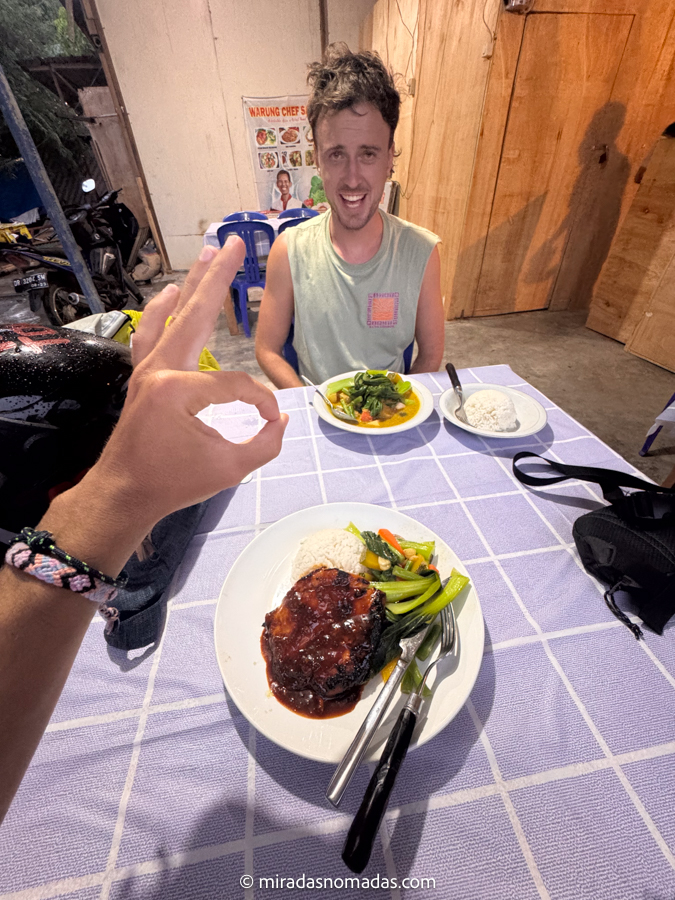
This is not a minor problem or something that «makes you stronger as a traveler». It can ruin 3-7 days of your trip and, in severe cases, require hospitalization. Here are the recommendations for travel to Bali and protect you:
A foolproof prevention protocol:
Only drink bottled water with the safety seal intact. This includes for brushing your teeth. The tap water in Bali is not drinkable under any circumstances.
Avoid ice unless you confirm that it comes from filtered water. In high-end restaurants you can ask; in local warungs, assume it is not.
Eat in places with a high volume of customers where food is prepared on the spot and served hot. A busy kitchen is synonymous with fresh ingredients.
Be extremely cautious with raw salads, already cut fruits and any raw food that has been washed with tap water.
It carries hand sanitizer (I recommend Sterillium or similar with at least 70% of alcohol) and use it religiously before every meal, especially when eating at street stalls.
Choose restaurants and warungs with good reviews on Google Maps. Locals know which ones are safe and which ones are not.
Avoid buffets as if your life depended on it. Food that remains exposed for hours at room temperature is a biological bomb.
What to take to Bali to fight Bali Belly:
- Oral rehydration salts (Sueroral, Bioralsuero): essential to replace lost electrolytes.
- Broad spectrum probiotics (Ultralevura, Lactobacillus): take them daily from 3 days before the trip.
- Loperamide (Fortasec): for emergencies when you need to «stop» symptoms temporarily.
- Bismuth subsalicylate (Peptobismol): excellent for treating and preventing traveler's diarrhea.
- Emergency antibioticsConsult your doctor about taking azithromycin or ciprofloxacin for severe cases.
Road safety: the other major risk
The traffic in Bali is chaotic, especially in Seminyak, Canggu and Ubud. If you plan to rent a scooter or motorcycle (the most common way to move around the island), you will need to have a International Driving Permit (PIC/IDP).
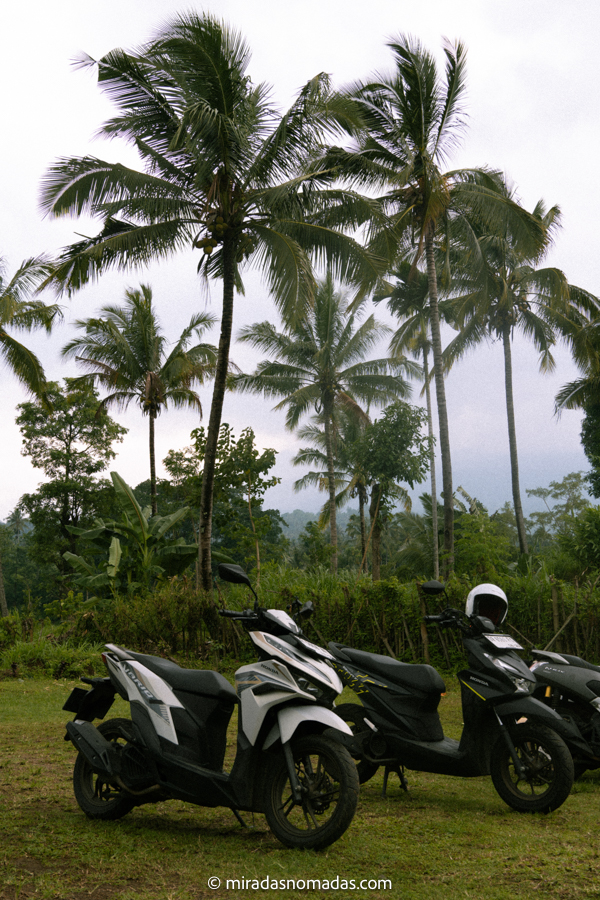
The Balinese police carry out frequent checks, especially in tourist areas. Driving without a PIC can result in fines of up to IDR 1,000,000 (approximately EUR 60) and, in some cases, the retention of the vehicle.
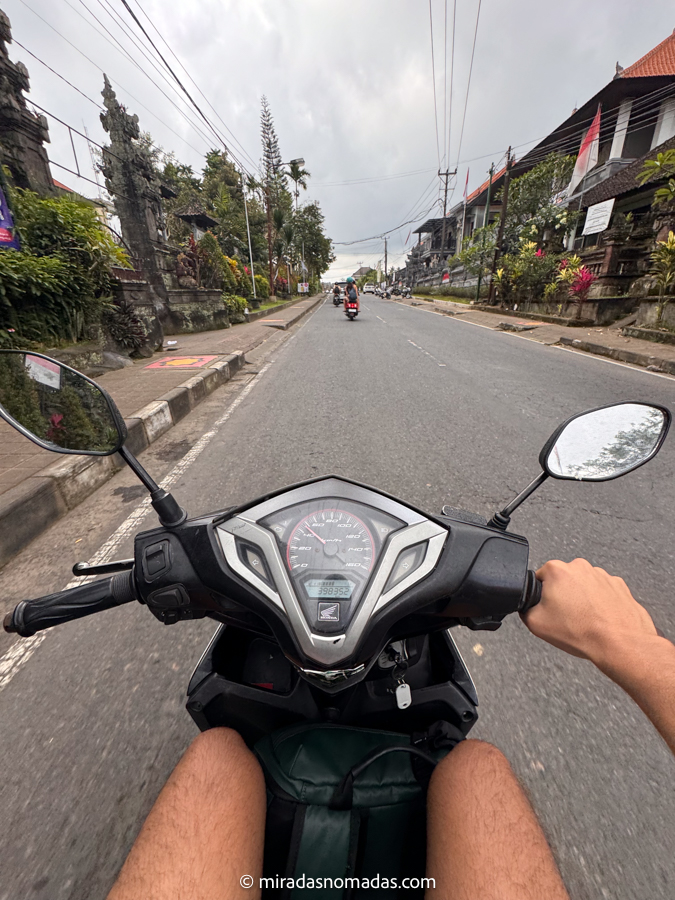
Road safety tips:
- Always rent with established companies that offer full insurance.
- Wear a helmet (mandatory) and clothing that covers arms and legs. Road rashes from falls in bathing trunks and T-shirts are painfully common.
- Avoid driving at night. Lighting is poor, there are many stray dogs and drivers under the influence of alcohol.
- Be especially careful on rural roads to waterfalls in BaliMany are unpaved and become slippery in the rain.
Mosquitoes and vector-borne diseases
Dengue is endemic in Bali, with peaks during the rainy season (November to March). There is no widely available vaccine or specific treatment beyond symptom management.
What to take to Bali to protect yourself from mosquitoes:
- Relec Extra Strong (DEET 50%) or Goibi Mosquito Repellent Xtreme (DEET 45%): for daily use on exposed skin areas.
- Permethrin spray (Relec Cero Olor): to impregnate clothes, mosquito nets and curtains. One application remains effective for up to 6 washes.
- Mosquito bracelets (Parakito): complementary, not as main protection.
- After-bite lotion with ammonia (Afterbite): to relieve stings.

Apply repellent every 4-6 hours, especially at dawn and dusk when mosquitoes are most active. If your lodging does not have window screens or air conditioning, consider carrying a portable collapsible mosquito net.
Common scams in Bali
Bali is generally safe in terms of violent crime, but tourist scams are frequent:
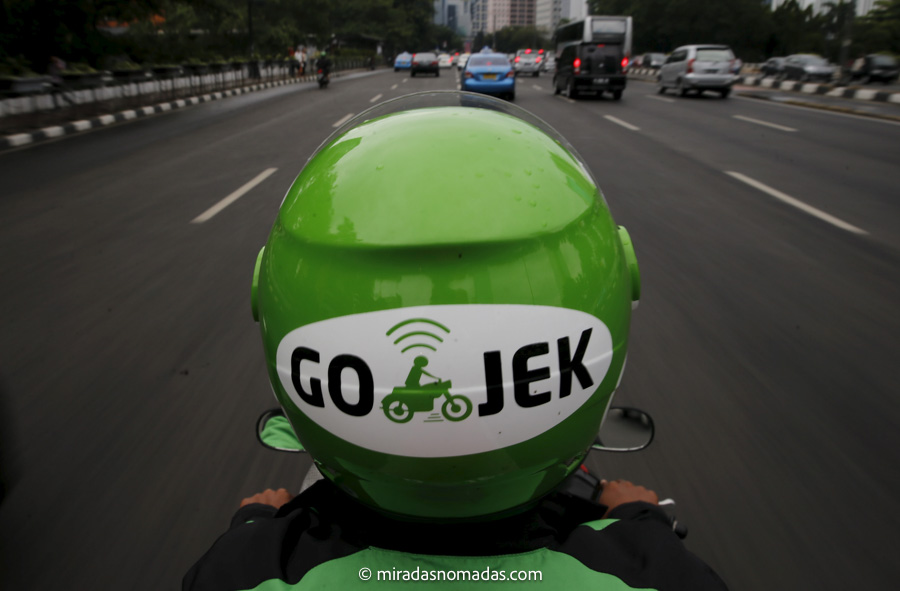
- Tricked taximeters: Use only Grab or Gojek for transportation. If you must take a cab, make sure it is Bluebird (the official ones with certified taximeter).
- Money exchange: Only change in official exchange houses with a visible license. The «sticky bill» trick is common in places with no reputation.
- «Closed temples»: Drivers will tell you that the temple you are going to is closed for ceremony and offer to take you to another one (where they receive commission). Always check with your accommodation.
- Scooter rental without contract: Never rent without written documentation. There are cases of tourists falsely accused of damaging the vehicle.
3. Digital Logistics: Apps and connectivity
In 2026, traveling without digital readiness is like traveling blindfolded. These are the essential technology tools:
Connectivity: eSIM vs. physical SIM
To stay connected without breaking the bank with international roaming, you have two main options:
international eSIM:
- Holafly, Airalo o NomadIndonesia specific plans are offered for Indonesia starting at 15 days with unlimited data (around 30-40 EUR).
- Advantage: you activate it before flying and arrive with immediate internet.
- Disadvantage: data only, does not include local number for calls.
If your company does not include internet, you can buy a SIM card when you arrive in Bali, but I recommend something even more comfortable: Prepare a Holafly eSIM with discount before your trip. You can book now with the code "MIRADASNOMADAS"and get a 5% discount. This way, you will have unlimited internet from the moment you land. It is perfect for short stay trips between one and two weeks, here you can read my experience using Holafly's eSIM in Switzerland.

Local SIM:
- TelkomselThe operator with the best coverage throughout the island, including rural areas.
- Indosat o XL Axiata: cheaper alternatives, good coverage in tourist areas.
- Cost: around IDR 100,000-150,000 (6-10 EUR) for 30 GB per month.
- Point of sale: airport (more expensive) or any minimarket (Indomaret, Alfamart).
Practical advice: Bring eSIM for the first few days and buy local SIM later if you need local calls. Many accommodations and tours require confirmation by WhatsApp to Indonesian numbers.
Essential Apps
All Indonesia (required): Already mentioned in documentation. Download it before traveling from iOS or Android.
GrabThe Uber of Southeast Asia. For transportation (GrabCar, GrabBike) and food delivery (GrabFood). Set it up before arrival and link a credit card or use cash.
GojekDirect competitor of Grab, often with better prices. Also offers additional services such as courier and payments.
Google Maps: Essential, but download offline maps of Bali complete. Rural areas have spotty coverage.
XE Currency o CurrencyFor conversion of Indonesian rupiah in real time. Fundamental to avoid getting lost in conversions with so many zeros.
WhatsApp: The language in Bali for business is literally WhatsApp. Hotels, tours, restaurants... everyone communicates through here.
Money and banks: how to avoid commissions
Traditional credit cards will eat you alive with commissions in Bali. Here is the optimal financial strategy:
Recommended cards without commissions:
- Revolut (physical + virtual card): no commissions up to 200 EUR/month at ATMs.
- N26No commissions on international payments, 3-5 free withdrawals according to plan.
- Wise (former TransferWise): real exchange rate without hidden markup.
- BnextSpanish option with no commissions for purchases abroad.
When you open your N26 travel account you earn €15 when you make your first card payment of €20 or more.
🔗 I recommend you to read my post about. the best cards for travel in which I discuss the different advantages of each.
Cash strategy:
- Withdrawals at ATMs BCA, Mandiri o BNIThey charge lower commissions (IDR 30,000-50,000 per transaction).
- Avoid ATMs in tourist areas of Seminyak and Kuta: they have abusive commissions.
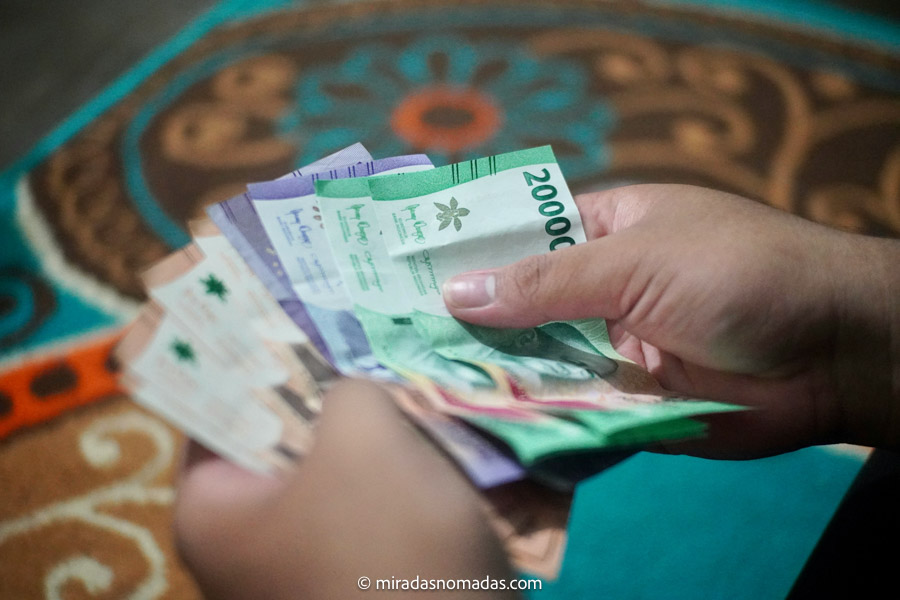
- Withdraws large amounts (1,500,000-2,000,000,000 IDR) to amortize commissions.
- Always carry some cash: many local warungs and traditional cabs do not accept cards.
How much to budget: For more information, please see our Bali budget guide where we break down daily costs by type of traveler.
4. What to take to Bali: Strategic Packing List
This is not a generic list. It is a selection based on Bali's specific climatic conditions, health risks and local culture. I will mention what to bring to Bali in each category with specific products that work.
Category 1: Clothing and footwear
Experience: Bali is tropical and humid (80%+ humidity). Synthetic fabrics that do not breathe become your worst enemy. In addition, you will visit temples with strict dress codes.
Technical specifications:
- Quick-drying technical T-shirts (Columbia, Decathlon, Uniqlo Airism): 4-5 units. They dry in 2-3 hours hanging.
- Lightweight long pants/shorts (linen, cotton): 2-3 pairs. Necessary for temples and sun protection.
- Sarong or sarong: Essential. You will use it in temples (mandatory), as a beach towel and improvised sheet. Buy it there for IDR 50,000-100,000.
- Technical underwearAvoid pure cotton; it retains moisture and takes forever to dry.
- Swimsuit2 at least. One always drying while using the other.
- Quality flip-flops (Havaianas, Reef): For the beach and to take them off quickly when entering temples or houses.
- Lightweight trekking shoesIf you plan to climb volcanoes or visit waterfalls. The Merrell Moab or Salomon X Ultra are perfect.
- Closed sandals (Teva, Keen): For walking in rice paddies and uneven terrain.
Council of surfing in Bali: If you go surfing, bring your own rash guard. The ones they rent out are destroyed by the sun and salt.
Category 2: First aid kit and personal care
Experience: Many western products are difficult to find or excessively expensive in Bali. Drugstore basics are available, but specific products or brands are not.

Technical sheet - First aid kit:
- Oral rehydration salts (Sueroral, Bioralsuero): 8-10 sachets.
- Probiotics (Ultralevura, Lacteol Fort): For the whole trip + 3 days before.
- Loperamide (Fortasec): 1 box of 10 capsules.
- Acetaminophen/IbuprofenHeadache, fever, inflammations.
- Antihistamine (Cetirizine, Loratadine): For stings or allergic reactions.
- Antibiotic cream (Furacin, Betadine): For cuts and grazes.
- Waterproof plasters and sterile gauze.
- Digital thermometerSmall and useful to detect fevers (dengue).
- Water purification tablets (Micropur): Backup in case you run out of bottled water in remote areas.
Technical sheet - Toilet:
- Sunscreen SPF 50+ water-resistant (Heliocare 360 Water Gel, Isdin Fusion Water): The Balinese sun is unforgiving. Reapply every 2 hours.
- After sun with aloe veraFor when you inevitably get burned on the first day.
- DEET Repellant 30-50% (Relec Extra Fuerte, Goibi Xtreme): 2 bottles if you go 15+ days.
- Shampoo and solid soap: Reduces plastics and takes up less space.
- Aluminum-free deodorantLocal deodorants are often ineffective in humid heat.
- Antibacterial wet wipesTo clean yourself before eating in places without washbasin.
- Compact travel toilet paperMany public toilets are missing or wet.
- Toothbrush + small toothpasteThe basics, but carry your brand; the local ones have strange flavors.

Category 3: Technology and electronics
Experience: Indonesia uses C and F type plugs (European) with 220V. If you are traveling from Spain or Europe, you do not need an adapter. If you are coming from America, you do.
Technical specifications:
- Universal adapter (if you are not from Europe): Model with integrated USB type Skross or LENCENT.
- 20,000+ mAh Powerbank (Anker, Xiaomi): For long days outside the hotel. Carry them in hand luggage (not allowed in the hold).
- Reinforced USB-C cable: Inexpensive cables die quickly in humidity.
- Waterproof cell phone case (Mpow, Syncwire): For protection at waterfalls and beaches.
- Action camera (GoPro, DJI Osmo): If you go surfing, snorkeling or diving.
- Noise canceling headphonesFor long flights and nights in hostels.
- Portable hard disk or extra SD cardsIf you shoot in RAW, you will fill up cards quickly.

Category 4: Essential Miscellaneous
Elements that make a difference:
- TSA padlockFor lockers in hostels and budget accommodations.
- Headlamp or small flashlight (Petzl, Black Diamond): For walking at night in unlit areas.
- Watertight bags (dry bags): To protect documents, money and electronics from humidity.
- Reusable bottle with filter (LifeStraw, Grayl): Sustainable and useful for emergencies.
- Foldable daypack (Sea to Summit, Osprey): For improvised excursions.
- Sunglasses with UV400 protection + lanyard: The tropical sun is brutal and the wind on a scooter can blow them away.
- E-book or Kindle: Physical books are heavy and swell with humidity.
- Small clothesline + pliersFundamental to dry clothes quickly.
Category 5: Documentation (physical + digital)
- Passport (valid 6+ months) + photocopy stored separately.
- International Driving Permit if you are going to rent a vehicle.
- International vaccination card (although it is not mandatory, some accommodations ask for it).
- Travel insurance card + emergency number noted.
- Reservation confirmations (accommodation, tours, flights) downloaded offline in PDF.
- Passport size photosFor visa extension procedures.
Digital tip: Upload everything to Google Drive or Dropbox. If you lose physical documents, having them in the cloud is a lifesaver.
5. When to travel: The best time to travel to Bali
The best time to travel to Bali is during the dry season, between April and October, with special preference for May, June and September. During these months:
- Little or no rainfall (maximum 1-2 rainy days per month).
- Lower relative humidity (60-70% vs. 85-90% in wet season).
- Calmer seas, ideal for snorkeling and diving.
- Better visibility on volcanoes for sunrise.
Rainy season (November-March):
- Rain almost daily, usually in the afternoon-evening.
- Increased risk of dengue fever.
- Lower prices on lodging (30-50% less).
- Less tourists: you can enjoy temples and almost empty beaches.
- The surfing in Bali is excellent on the west coast during these months.
Avoid if you can:
- July-AugustPeak of European and Australian tourism. Peak prices and overcrowded places.
- End of DecemberChristmas and New Year. Everything fills up and prices triple.
6. Survival Guide: Balinese Etiquette and Culture
Bali is a deeply spiritual island where 90% of the population practices Balinese Hinduism. Respecting local customs is not only polite; it is essential to avoid offending your hosts.
Temples and sacred sites
Dress code:
- Shoulders and knees always covered. Not negotiable.
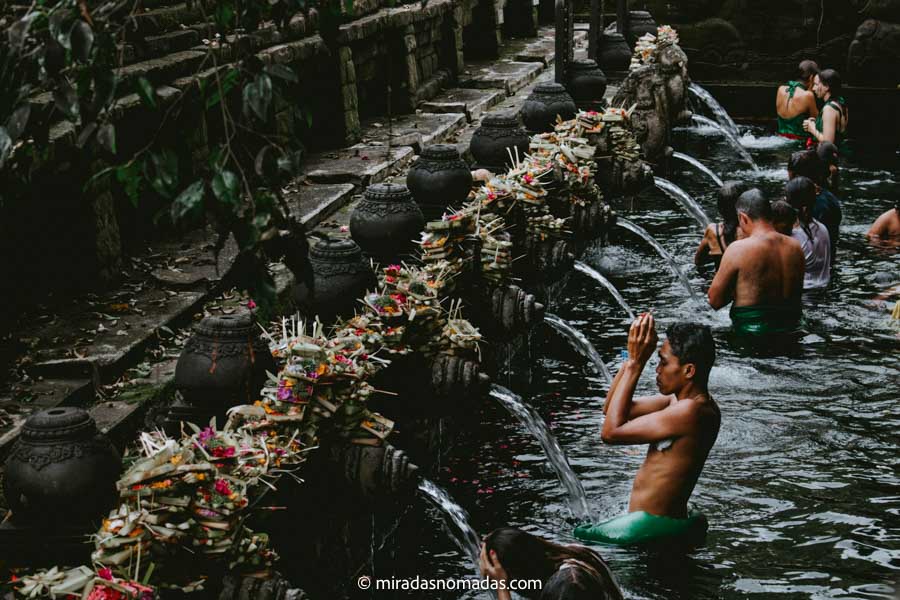
- Sarong (long cloth) and sash (selendang) are mandatory. They are rented at the entrance for IDR 10,000-20,000 or free in some temples.
- Prohibited to enter during menstruation (applies to women).
- Do not stand higher than the priest or altar during ceremonies.
Behavior:
- Silence and discretion. Temples are spaces of active prayer, not museums.
- Do not use flash when photographing inside temples.
- Do not sit or lean on sacred walls or altars.
- If there is a ceremony, observe from a distance unless you are invited to approach.
To learn more about the main temples, please consult our guide to what to see in Bali.
Interaction with locals
Gestures and courtesy:
- Always use the right hand to deliver or receive objects, money or food. The left hand is considered impure.
- Do not touch anyone's head (not even children). The head is sacred in Balinese culture.
- Do not point with your finger. Use the open hand with the palm facing up.
- Smile. Bali is known as the «island of smiles» and a friendly attitude opens all doors.
Negotiation:
- Haggling is part of the culture in markets and with street vendors, but do it with respect and humor.
- In stores with fixed prices and restaurants, there is no negotiation.
- Tipping: not mandatory but appreciated. 10% in restaurants if the service was good. Small tips (IDR 20,000-50,000) for local guides, drivers, hotel staff.
Language in Bali
The language in Bali official is the Indonesian (Bahasa Indonesia), although the Balinese speak among themselves in Balinese, a completely different language. In tourist areas, English is widely spoken in restaurants, hotels and tours.
Useful basic phrases:
- Halo / Selamat pagi (good morning) / Selamat siang (good afternoon)
- Terima kasih (thank you) / Terima kasih banyak (thank you very much)
- Sama-sama (you're welcome)
- Maaf (sorry/apology)
- Berapa harganya? (how much does it cost?)
- Terlalu mahal (too expensive - to bargain)
- Tolong (please)
Learning these basic phrases generates immediate smiles and better treatment. The Balinese greatly appreciate the effort.
Sustainability and responsible tourism
Bali faces serious problems of plastic pollution and overtourism. As a conscious traveler, you can contribute:
Waste management:
- Bring your own reusable bottle and refill it in filtered water dispensers (many lodgings and restaurants have them).
- Reject plastic straws (di «tidak pakai sedotan, terima kasih»).
- Carry cloth bag for shopping in markets.
- Pick up your garbage on beaches and in nature. The municipal garbage collection system is deficient in rural areas.
Responsible consumption:
- Prioritize locally owned restaurants and stores over international chains.
- Buy handicrafts directly from artisans in markets such as Ubud or Sukawati, not in tourist megastores.
- Avoid tours with wild animals (elephant rides, selfies with sedated animals). Support certified ethical sanctuaries.
- Do not buy coral, shells or marine life products.
Respect for the environment:
- Do not touch the coral when snorkeling or diving.
- Use reef-safe sunscreens (without oxybenzone and octinoxate).
- Participate in beach cleanups if you find one organized. Communities like Canggu and Uluwatu organize them regularly.
If you are interested in exploring beyond Bali, consider visiting what to see in Lombok, The neighboring island with less tourism and more unspoiled nature.
Conclusion: Your adventure starts here
Traveling to Bali in 2026 is not just about buying a cheap flight and showing up in flip-flops and a bathing suit. It is to understand that you are visiting an island with fragile ecosystems, an ancient culture that deserves respect and a tourism infrastructure in constant regulatory evolution.
The tips for traveling to Bali you have read here are not alarmist: they are realistic. The Bali Belly is real and can ruin precious days of your trip. Immigration controls are strict and you can be deported if you don't meet the requirements. The traffic is chaotic and without preparation it can be dangerous.
But it is also true that Bali generously rewards those who come prepared. The rewards range from breathtaking sunrises on Mount Batur to conversations with artisans in Ubud that will make you rethink your life priorities. From perfect waves at Uluwatu to religious ceremonies at hidden temples where you'll be the only Westerner.
Saber what to bring to Bali (that repellent with DEET, those probiotics, that downloaded app) on time is the difference between spending your troubled trip in a Seminyak clinic or enjoying a sunset at Tanah Lot.
Now you have the map. The tools are identified. The risks are calculated. What you do with this information will determine whether you come back from Bali with typical Instagram photos or a real transformation.
The island of the Gods awaits you. Go prepared, travel with respect and allow Bali to change you the way only the best destinations can.
Selamat jalan (bon voyage).

